

40 Years of Rolex Paris Masters – Episode #2: The rise of power (1996 – 2005)
Our Rolex Paris Masters anniversary series continues as the tournament celebrates its 40th birthday in 2026. During its second decade (1996 - 2005), the Paris event became a privileged witness to the evolution of modern tennis, a game played faster and harder than ever before. No player embodied that transformation better than Marat Safin, who became the tournament’s second three-time champion after Boris Becker.
The defining champion: Marat Safin
Paris has always had a soft spot for larger-than-life characters. In many ways, it was only fitting that Boris Becker (1.91m), the dominant figure of the Rolex Paris Masters' first decade (1986 - 1995), should be succeeded by Marat Safin (1.93m), another charismatic giant who would leave an indelible mark on the next ten editions of the tournament.
Safin was a player perfectly suited to his era. As the new millennium approached, tennis entered a period of dramatic acceleration, driven in particular by the widespread adoption of polyester strings. With its fast indoor conditions, the Rolex Paris Masters provided the ideal stage for increasingly explosive and spectacular tennis. Under the influence of this new generation, the tournament itself continued to grow in stature and popularity, surpassing the 100,000-spectator mark for the first time in 2002.
Straddling two centuries, this second decade represented a crossroads in the sport’s evolution. It began in 1996 with a dominant display from Sweden’s Thomas Enqvist, who defeated Yevgeny Kafelnikov 6-2, 6-4, 7-5 in the final. The years that followed were initially shaped by the exploits of the two defining champions of the 1990s.
Having already lifted the trophy in 1995, Pete Sampras returned to the winner’s circle in 1997, defeating Jonas Björkman 6-3, 4-6, 6-3, 6-1. In doing so, he became only the second multiple Rolex Paris Masters champion after Boris Becker, whom he also defeated along the way. A year later, however, “Pistol Pete” fell at the final hurdle against Greg Rusedski, who captured the title with a 6-4, 7-6(4), 6-3 victory. The Briton's triumph was accompanied by a serve clocked at 239.7 km/h, a perfect illustration of the growing power that was transforming professional tennis.
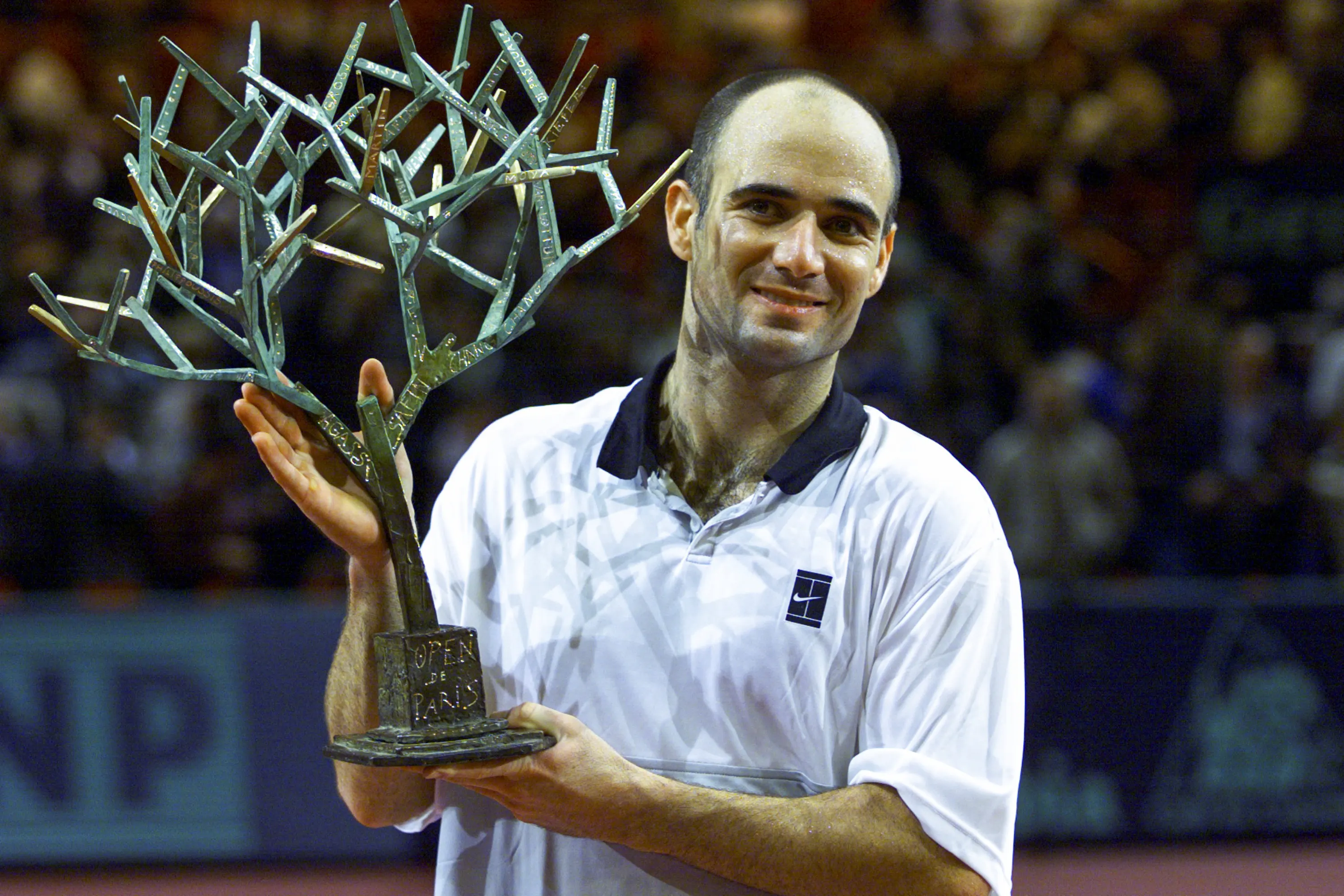
In 1999, Andre Agassi joined Sampras among the tournament’s greats. Already crowned in Paris in 1994, the American became the first player to complete the rare Roland-Garros and Rolex Paris Masters double in the same season. Watched from the stands by his future wife Steffi Graf, Agassi defeated a promising 19-year-old finalist named Marat Safin 7-6(1), 6-2, 4-6, 6-4.
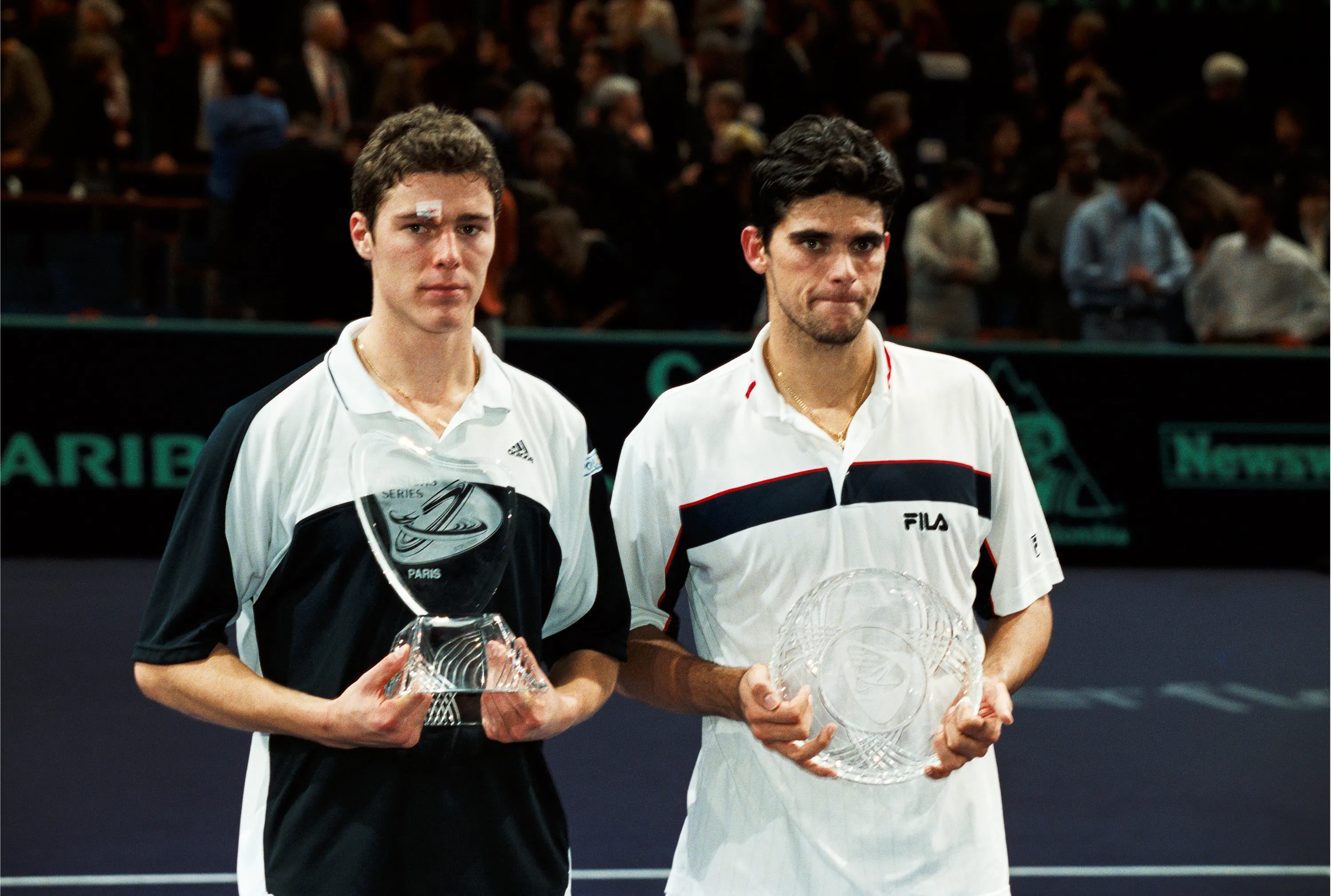
That young gun was widely tipped to become one of the sport’s future stars. He wasted little time proving those predictions correct. In 2000, fresh from winning his maiden Grand Slam title at the US Open, Safin truly announced himself in Paris. He claimed his first Rolex Paris Masters crown at the end of one of the tournament’s greatest finals, defeating Mark Philippoussis 3-6, 7-6(7), 6-4, 3-6, 7-6(8). The victory was all the more remarkable because Safin had split open his eyebrow during a desperate dive in the third set. At just 20 years and nine months old, he became the youngest world No.1 in history, a record that was broken the following year by Lleyton Hewitt and then in 2022 by Carlos Alcaraz.
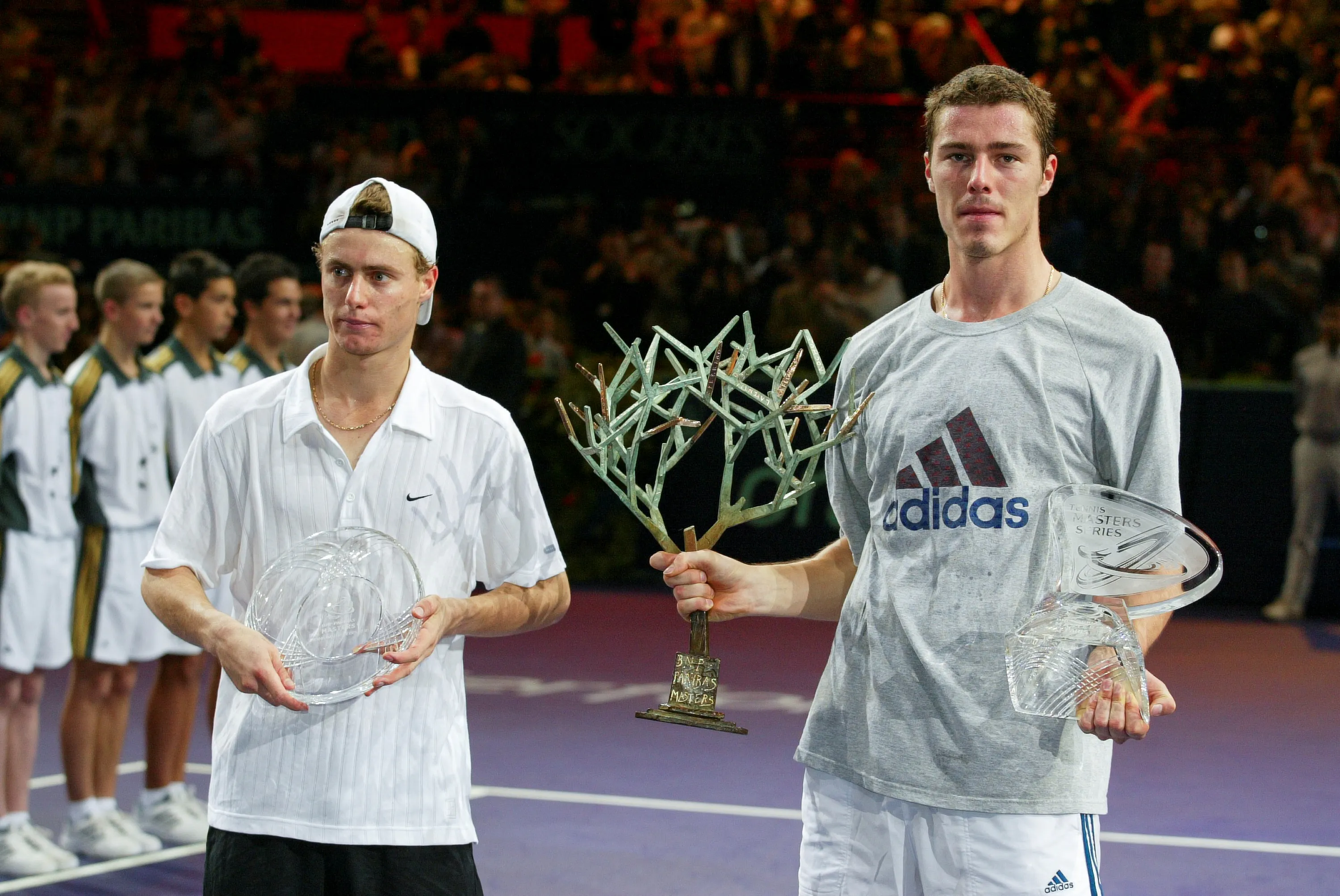
Throughout the early 2000s, the Rolex Paris Masters became the showcase for Safin’s spectacular brand of tennis. Winning every two years, he added a second title in 2002 by defeating rival Lleyton Hewitt 7-6(4), 6-0, 6-4, before claiming a third in 2004 against surprise qualifier Radek Stepanek, 6-3, 7-6(5), 6-3. His third triumph drew him level with Becker in the tournament’s all-time standings. In return, the Paris crowd embraced him wholeheartedly, seemingly forgiving the fact that he had also played a leading role in Davis Cup final victory over France in the very same arena two years earlier.
More broadly, the tournament continued to favour big servers and attacking players. Tim Henman's triumph in 2003 was another example. The classic serve-and-volley specialist defeated Andrei Pavel 6-2, 7-6(6), 7-6(2) to become one of the few British champions in tournament history. Yet, as always, there had to be an exception.
That exception arrived in 2001 in the form of Sébastien Grosjean. Standing just 1.75m tall, the gifted Frenchman relied on his talent, speed and instinctive feel for the game to defy expectations and become the second French champion after Guy Forget. The Marseille native defeated Yevgeny Kafelnikov, who was losing a second Paris final, 7-6(4), 6-1, 6-7(5), 6-4 to capture his first Masters Series title and secure qualification for the ATP Finals. A memorable double reward.
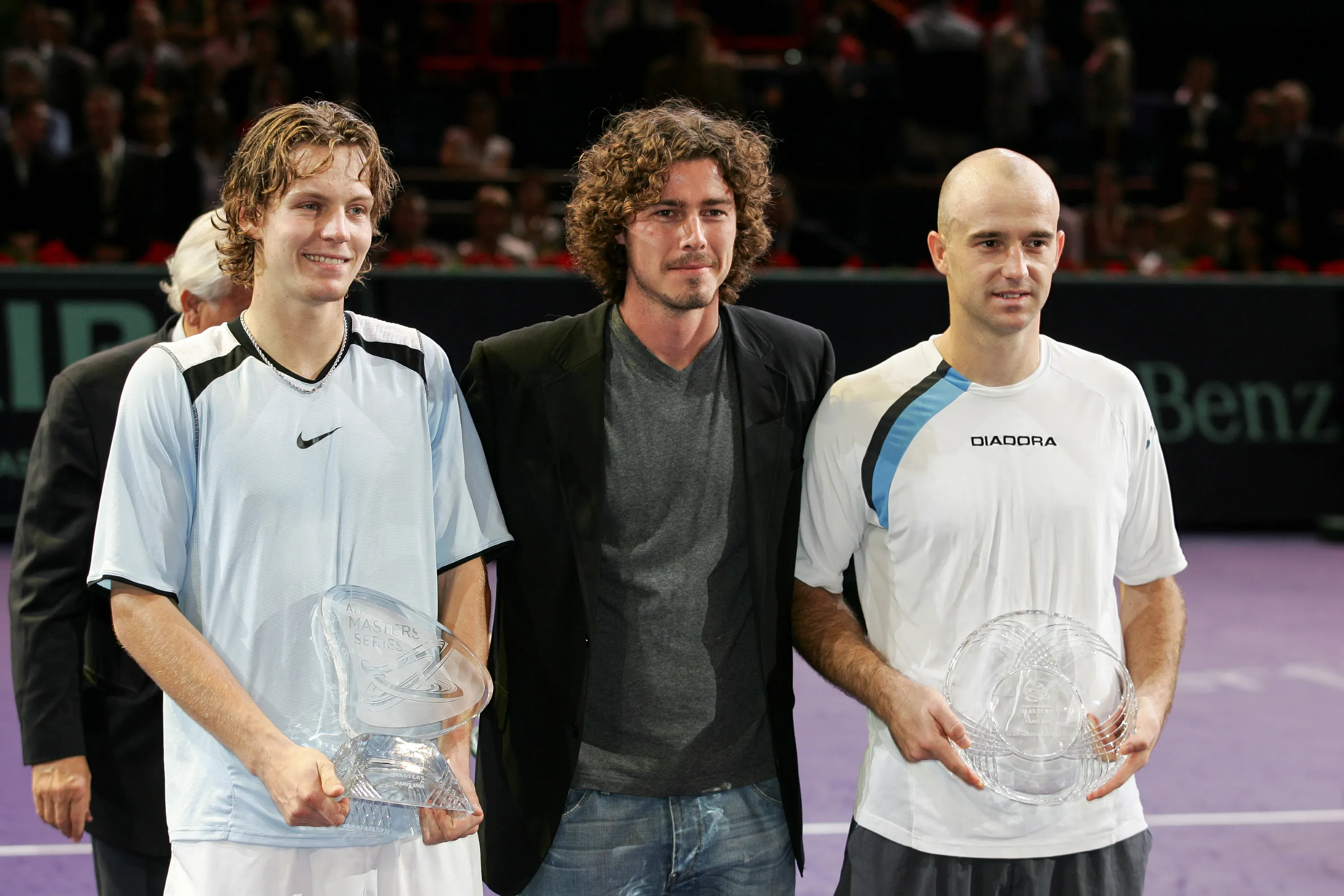
True to its reputation as a launchpad for future champions, the Rolex Paris Masters ended this second decade by crowning another rising star. In 2005, a 19-year-old Tomas Berdych claimed the biggest title of his young career, defeating Ivan Ljubicic 6-3, 6-4, 3-6, 4-6, 6-4 in the last five-set final ever contested at the tournament. In a symbolic passing of the torch, an injured Marat Safin, sidelined with a back problem, stepped onto the court to present l’Arbre de Fanti to the young Czech. It was the perfect way to close one era before another began.
Champions (1996 – 2005)
1996: Thomas Enqvist (SWE) d. Yevgeny Kafelnikov 6-2, 6-4, 7-5
1997: Pete Sampras (USA) d. Jonas Björkman (SWE) 6-3, 4-6, 6-3, 6-1
1998: Greg Rusedski (GBR) d. Pete Sampras (USA) 6-4, 7-6(4), 6-3
1999: Andre Agassi (USA) d. Marat Safin 7-6(1), 6-2, 4-6, 6-4
2000: Marat Safin d. Mark Philippoussis (AUS) 3-6, 7-6(7), 6-4, 3-6, 7-6(8)
2001: Sébastien Grosjean (FRA) d. Yevgeny Kafelnikov 7-6(4), 6-1, 6-7(5), 6-4
2002: Marat Safin d. Lleyton Hewitt (AUS) 7-6(4), 6-0, 6-4
2003: Tim Henman (GBR) d. Andrei Pavel (ROU) 6-2, 7-6(6), 7-6(2)
2004: Marat Safin d. Radek Stepanek (CZE) 6-3, 7-6(5), 6-3
2005: Tomas Berdych (CZE) d. Ivan Ljubicic (CRO) 6-3, 6-4, 3-6, 4-6, 6-4