40 Years of Rolex Paris Masters – Episode #1: The attacking players lead the way (1986 – 1995)
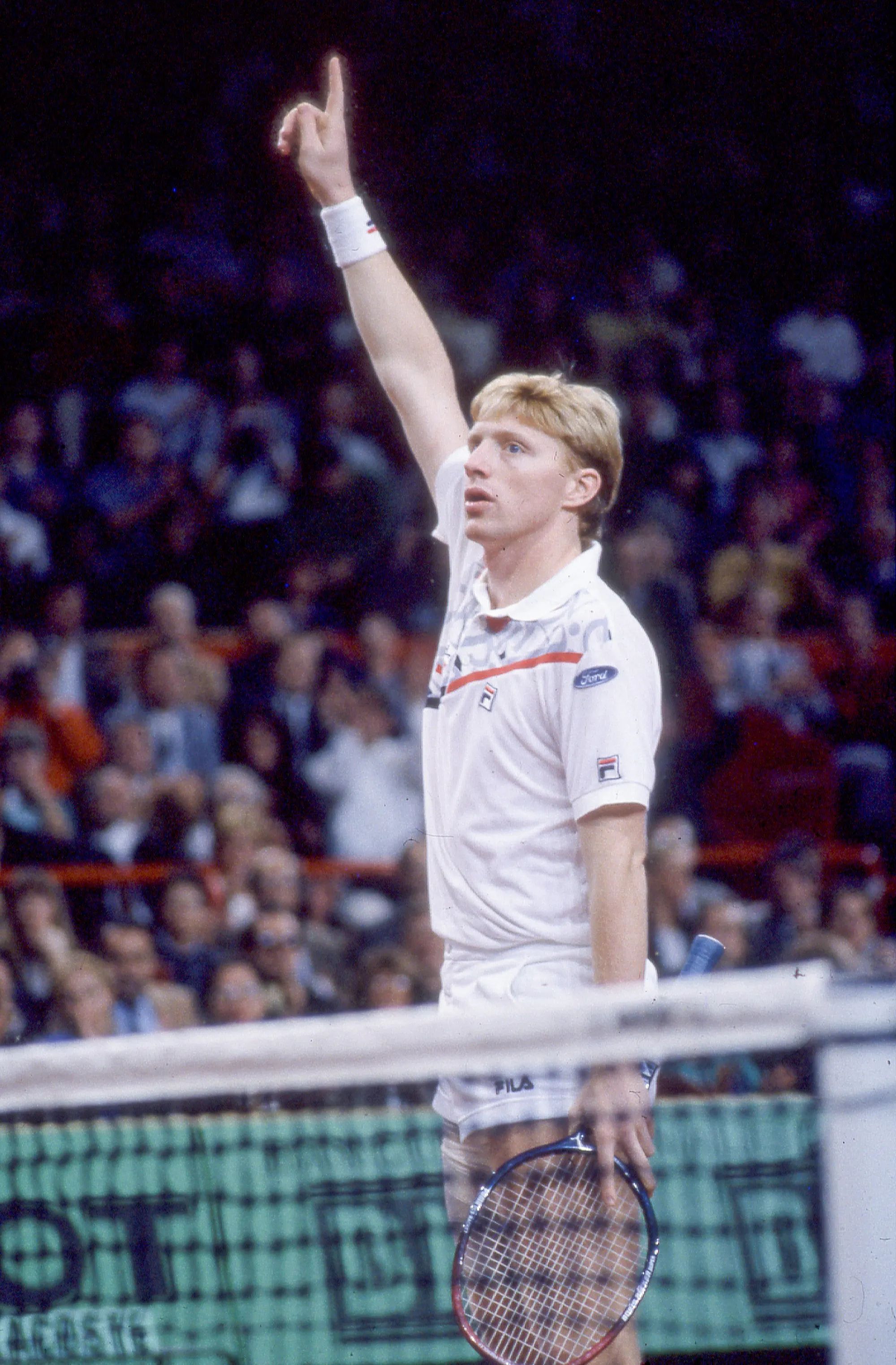
In 2026, the Rolex Paris Masters celebrates its 40th anniversary! To mark the occasion, we’re looking back at the four decades that have shaped the tournament’s history. This first episode revisits the formative years (1986 – 1995), an era defined by Boris Becker’s dominance and a tournament that heavily favoured attacking tennis.
The defining champion: Boris Becker
Following the disappearance of the Open Crocodile, which had been held at Stade Pierre-de-Coubertin until 1982, Paris sought to establish a major indoor tournament of its own. The Palais Omnisports de Paris-Bercy, inaugurated in 1984, provided the perfect stage for those ambitions. It would remain the tournament’s home for decades, until its move to the Plénitude Arena in 2025.
From its very first edition in 1986, the Rolex Paris Masters, then known as the Open de Paris-Bercy and organised by the FFT, quickly established itself as the biggest indoor event on the calendar outside the ATP Finals. Part of the Super Series circuit, the forerunner of today's Masters 1000 category, it immediately forged a distinctive identity: a spectacular atmosphere, modern presentation and a deliberate contrast with Roland-Garros, its illustrious neighbour on the opposite bank of the Seine.
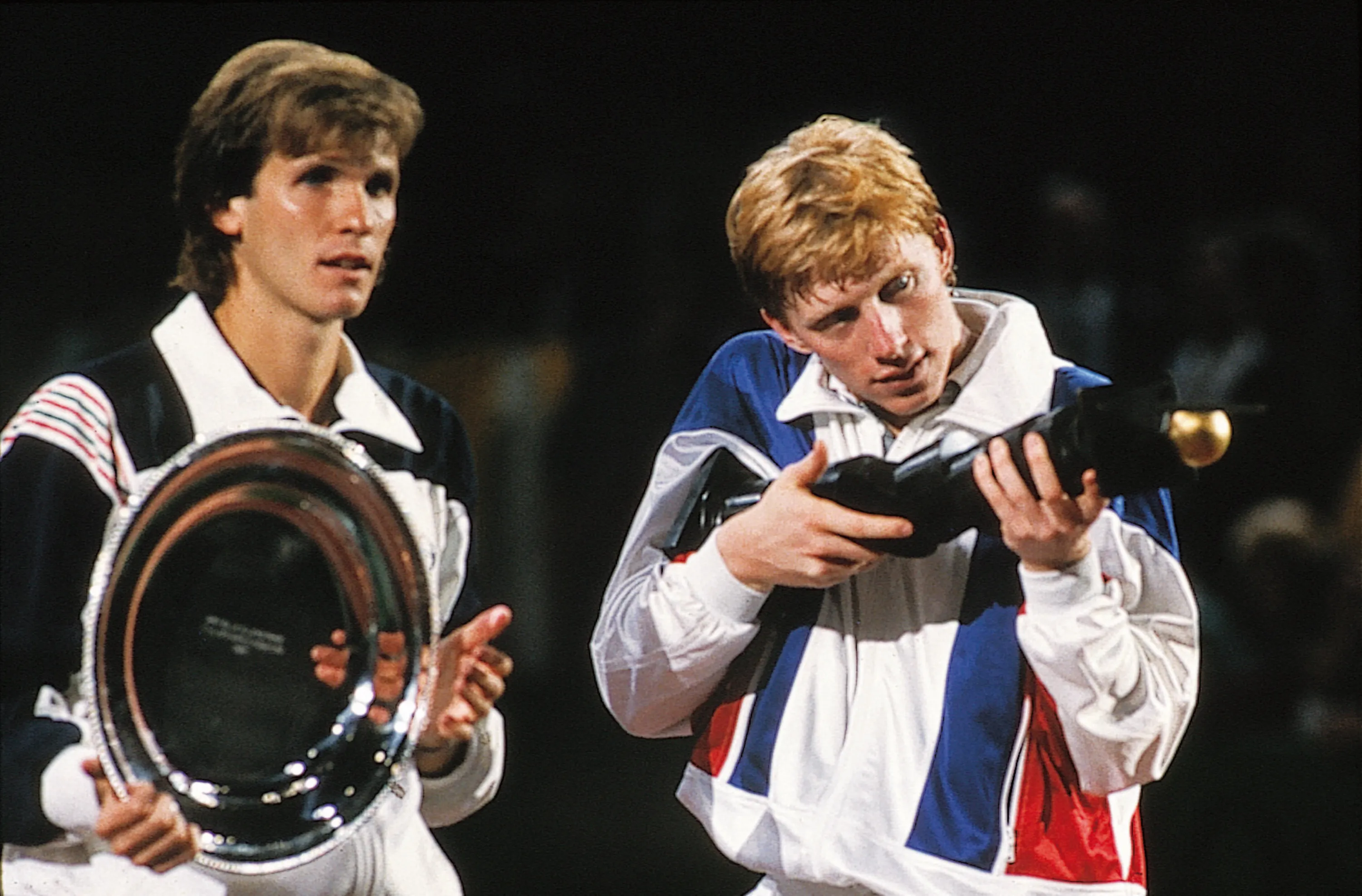
To launch the tournament in style, it needed a star champion. Boris Becker proved the perfect fit. The fast indoor carpet surface seemed tailor-made for his explosive game. On 2 November 1986, just days before his 19th birthday, the German became the tournament’s first-ever champion by defeating surprise qualifier Sergio Casal of Spain in the final, 6-4, 6-3, 7-6(3).
That maiden triumph marked the beginning of a long love story. Between 1986 and 1995, “Boom Boom” reached five finals and captured three titles. Winning every three years, he repeated the feat in 1989, defeating great rival Stefan Edberg 6-4, 6-3, 6-3 in a high-class final, before claiming a third crown in 1992 against Guy Forget, 7-6(3), 6-3, 3-6, 6-3.
A year earlier, Forget had become the first French champion of the event, winning the longest final in tournament history against Pete Sampras, 7-6(9), 4-6, 5-7, 6-4, 6-4 after 3 hours and 46 minutes.
In between, Becker never truly lost his grip on Paris. In 1990, during the tournament’s first final between the world’s top two players, he was forced to retire against Edberg at 3-3 after suffering a thigh injury. The following year, illness forced him to withdraw before the latter stages. It was not until 1993 that the three-time champion was genuinely defeated on court, falling to Frenchman Arnaud Boetsch in the quarter-finals.
Under the influence of the charismatic German, the event quickly gained prestige. In 1990, the draw expanded from 32 to 48 players, attracting the entire world elite. The playing conditions heavily favoured big servers and attacking players.
As always, there was an exception. In 1988, Amos Mansdorf, standing just 1.73 metres tall and ranked No.33 in the world, became one of the most surprising champions in tournament history when he defeated Brad Gilbert, a two-time losing finalist. Yet even the talented Israeli was particularly comfortable on fast indoor surfaces.
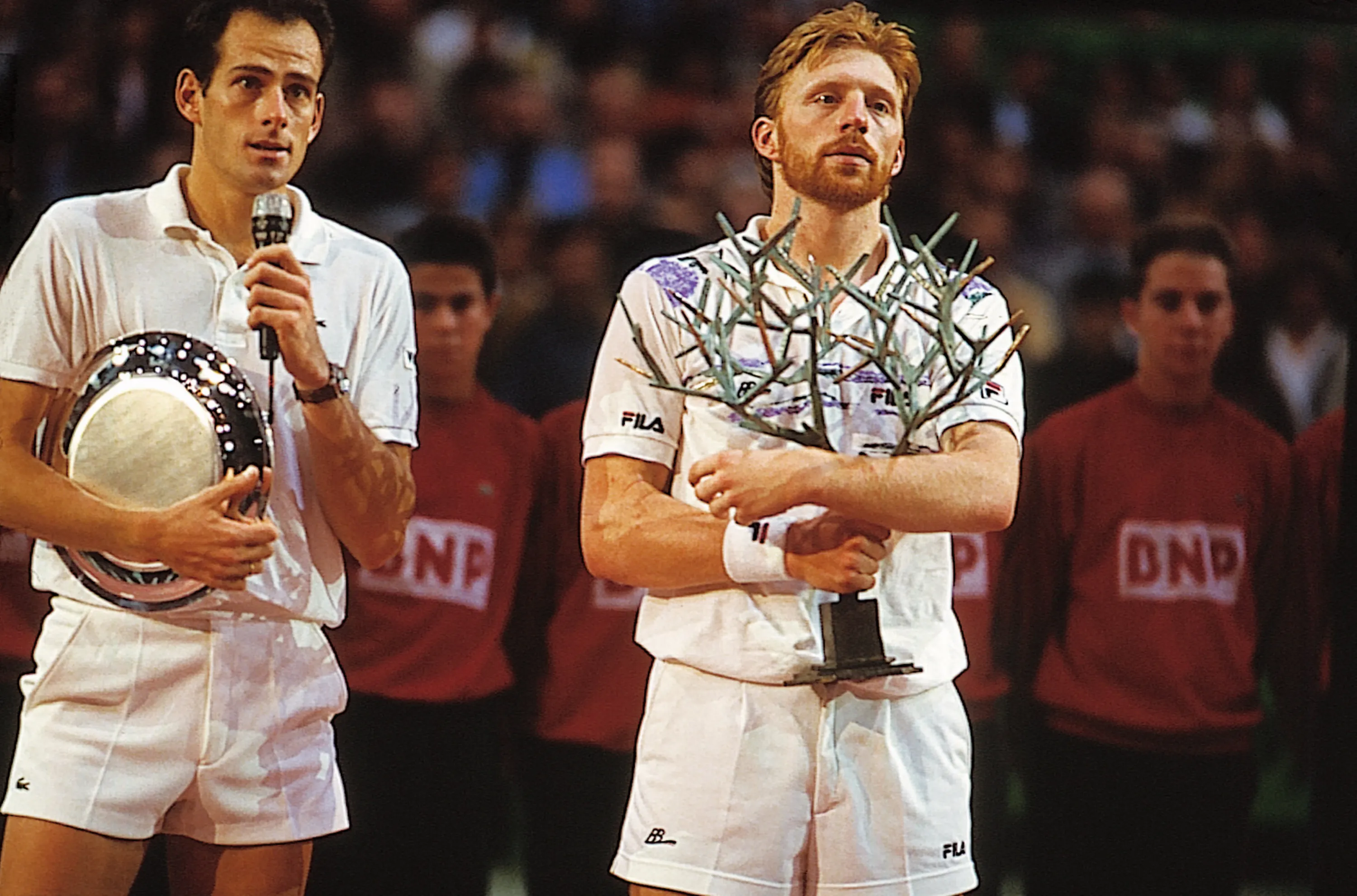
Overall, the attacking players quickly made Paris their territory.
When Becker was not lifting the trophy, Tim Mayotte (1987), Stefan Edberg (1990), Guy Forget (1991) and Goran Ivanisevic (1993) stepped in. Ivanisevic’s title run was especially remarkable. The Croatian blasted 97 aces throughout the week, including 27 in the final against Andreï Medvedev, whom he defeated 6-4, 6-2, 7-6(2).
The sheer dominance of his serve prompted organisers to slightly slow down the surface the following year in an effort to restore some balance between attacking players and baseline specialists. The change paid immediate dividends for Andre Agassi. In 1994, the American defeated Marc Rosset 6-3, 6-3, 4-6, 7-5 to claim the title, becoming the first future Roland-Garros champion to triumph at the Rolex Paris Masters.
By contrast, Wimbledon champions dominated the tournament’s early years, winning seven of the first ten editions. Among them was a particularly illustrious champion in 1995. Pete Sampras captured the first of his two Paris titles by defeating, fittingly, Boris Becker in the final, 7-6(5), 6-4, 6-4.
A perfect passing of the torch to close the first chapter in the tournament’s history.
Champions (1986–1995)
1986: Boris Becker (GER) d. Sergio Casal (ESP) 6-4, 6-3, 7-6(3)
1987: Tim Mayotte (USA) d. Brad Gilbert (USA) 2-6, 6-3, 7-5, 6-7(5), 6-3
1988: Amos Mansdorf (ISR) d. Brad Gilbert (USA) 6-3, 6-2, 6-3
1989: Boris Becker (GER) d. Stefan Edberg (SWE) 6-4, 6-3, 6-3
1990: Stefan Edberg (SWE) d. Boris Becker (GER) 3-3 ret.
1991: Guy Forget (FRA) d. Pete Sampras (USA) 7-6(9), 4-6, 5-7, 6-4, 6-4
1992: Boris Becker (GER) d. Guy Forget (FRA) 7-6(3), 6-3, 3-6, 6-3
1993: Goran Ivanisevic (CRO) d. Andrei Medvedev (UKR) 6-4, 6-2, 7-6(2)
1994: Andre Agassi (USA) d. Marc Rosset (SUI) 6-3, 6-3, 4-6, 7-5
1995: Pete Sampras (USA) d. Boris Becker (GER) 7-6(5), 6-4, 6-4