

40 years – Guy Forget: 'The tournament has a very strong identity'
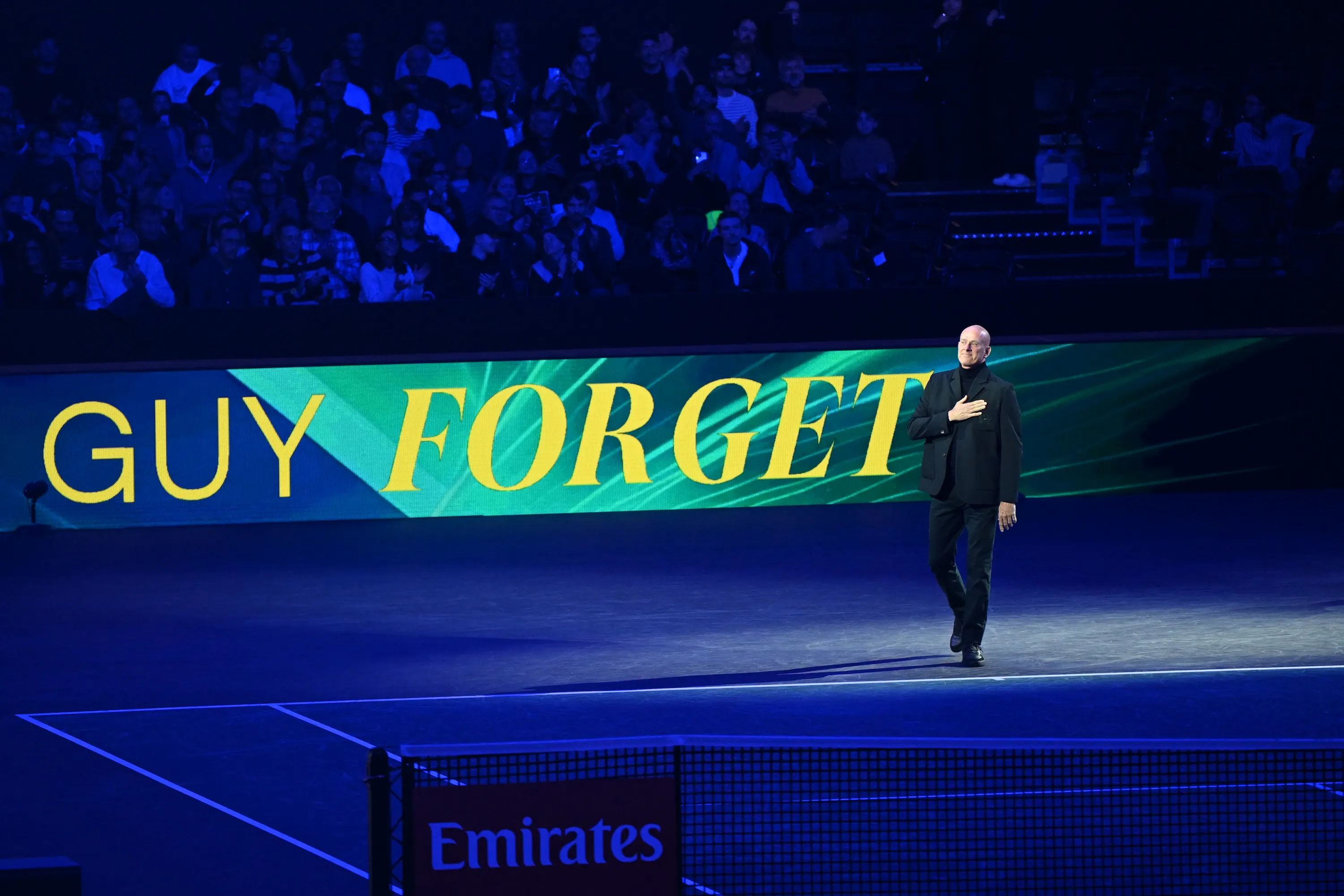
Winner of the tournament in 1991 during the finest season of his career, Guy Forget reflects on his triumph in Paris and shares his thoughts on the modern game.
You were honoured on Saturday as a former champion. What memories do you have of your victorious run in 1991?
Looking back at the footage of that victory... I was good-looking, I was fast, and I was playing some pretty good tennis! (laughs) Of course, it was a highlights reel, so they only showed the great points. It inevitably brings back wonderful emotions. And being applauded by the crowd all these years later is a lovely tribute.
You seemed quite emotional during the ceremony...
Yes, because people often show me footage of the Davis Cup in 1991, but almost never footage from the Rolex Paris Masters. Back then, the matches were played over five sets. It was a real battle and physically demanding. When you win a match like that, breaking serve in the fifth set, it's such a release and such a relief. I remember feeling a mixture of emotions, especially with my family there to share the moment. And then, three weeks later, everything was completely overshadowed by the Davis Cup euphoria. So this ceremony was really enjoyable. It felt like a little dose of rejuvenation.
Was there a particular moment during the tournament when you felt you could actually win it?
When you're not world No.1 or the best indoor player in the world, you don't arrive at a Masters 1000 event thinking you're going to win the title. It happened gradually, one match at a time.
When I played Sampras, who had already won the US Open and the Masters, I wasn't telling myself, "I'm going to beat him." I was thinking, "If I play well, if I serve well, I can cause him problems." But then you still have to go out and do it. That's why the joy is so immense when match point is over, because everything can change with a single shot.
You played a very attacking style of tennis, which is quite unusual in today's game. Are there any current players you identify with?
Let's just say I really appreciate the court surface that has been introduced this year because it's much quicker. I think if there were more courts like this one, we'd see more players in the mould of Pete Sampras, Henri Leconte, Stefan Edberg or Boris Becker. Players whose Grand Slam achievements and attacking instincts had fans rising from their seats.
Who plays like that today? Unfortunately, not many. Alcaraz, to some extent. When he comes to the net, he produces such spectacular points. I think people want to see different styles of tennis.
Björn Borg may have been the biggest star the sport has ever known. He helped take tennis onto a truly global stage. And McEnroe, in his own way, was a genuine genius. Some people came to watch McEnroe just as much to boo him as to cheer him. The sport needs contrasting styles because tennis is entertainment first and foremost. People want to see things that are exciting and extraordinary.
You were tournament director here and know this event extremely well. What do you think of its new home, the Plenitude Arena?
From an infrastructure standpoint and in terms of player comfort, there is simply no comparison. It's an incredible facility. The restaurant, the fitness area, the height of the outside courts... everything has been designed with the players in mind.
I occasionally work in television commentary and, because the tournament's partners have remained largely the same, many of the familiar reference points are still there. I think that's really important. The court colour hasn't changed. The trophy hasn't changed. The tournament has a very strong identity. I hope we'll see more French champions here in the future following in Jo's footsteps. Looking back, French players have often produced some of their best tennis in Paris. Hopefully that tradition will continue.
