

New court, same energy: inside the Rolex Paris Masters and its new era
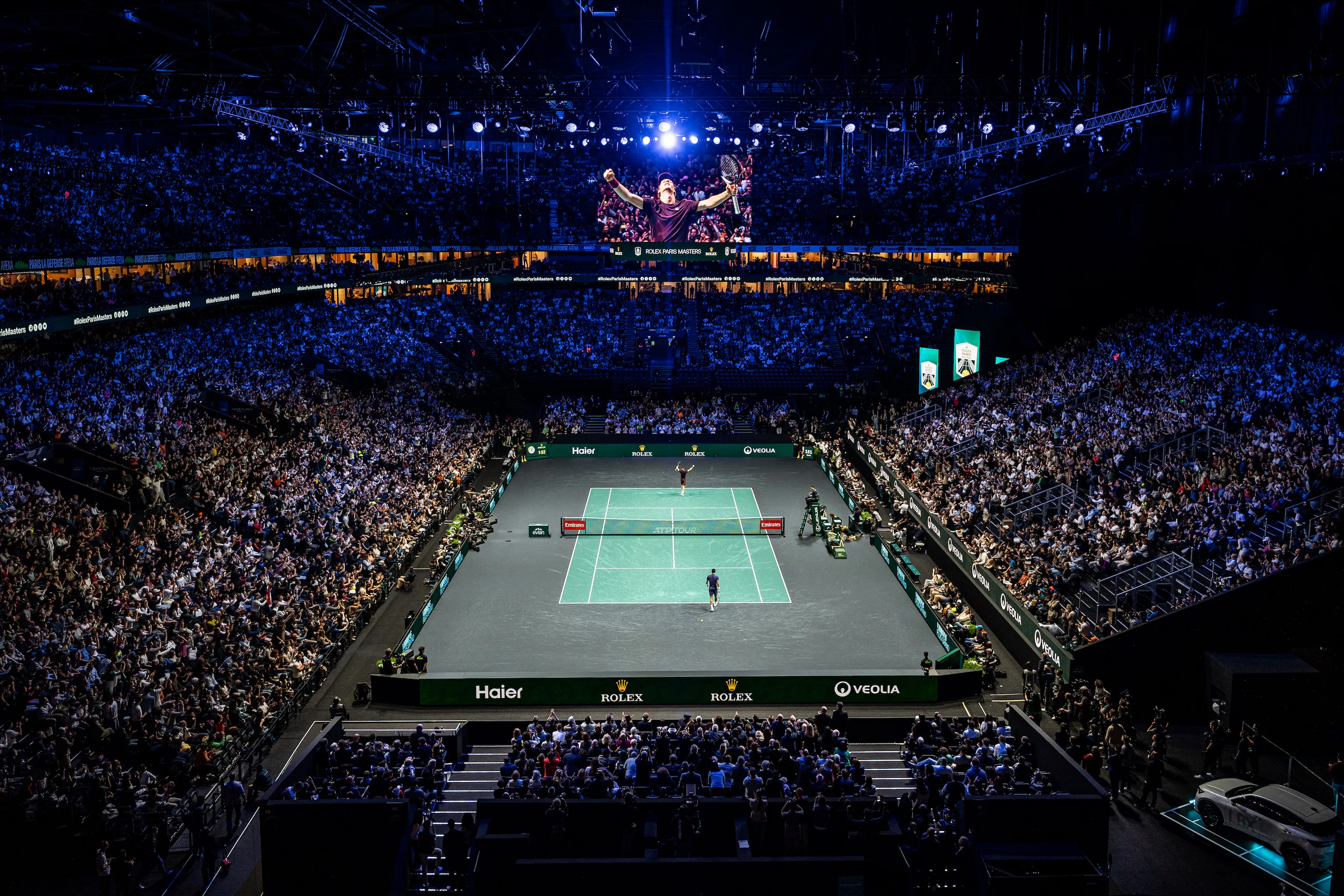
A few days after Sinner's first parisian title, we take a look back on the success of the new venue of the tournament.
Original article published on October 30, 2025 on ATPTour.com
For nearly four decades, the Rolex Paris Masters has been where the season’s final sparks fly. A place where champions rise to deliver another dazzling performance, where the crowd’s roar bounces off the roof and the lights pulse with every forehand. Few tournaments blend elegance and energetic chaos quite like Paris. So it feels fitting that, for its 40th edition, the event has moved to Paris La Defense Arena: Europe’s largest indoor sports venue and a bold new stage for indoor tennis.
“It’s stunning. If you like tennis, this is the place to be right now,” said Félix Auger-Aliassime, this year's finalist. “Honestly, the attention to detail is second to none. Even the seats for the players, everything is stitched on. It’s beautiful.”
The numbers alone tell the story. The 17,500-seat centre court makes it the second-largest tennis court at a year-round event in the world, behind only Arthur Ashe Stadium at the US Open.
Situated in the heart of Paris’s business district, the Arena’s interior is divided by 9,000 square metres of blackout curtains, creating a sleek amphitheatre feel. Within those walls are three additional match courts, a practice court, a dedicated gym and warm-up zone for players.
“I think it was great timing to move to our new home, to rewrite our story, to reinvent ourselves and get bigger,” said Cedric Pioline, Tournament Director. “We have a new venue with a new setup. The identity of the tournament will be closer to events such as Roland-Garros, where there's a lot of noise, a lot of life. This is the direction we are taking.”

There has never been a shortage of atmosphere at France’s ATP Masters 1000 event. Last year, Alexander Zverev silenced two home favourites in front of passionate Parisian crowds on his way to the title. Returning to the French capital this year, the German knew exactly what awaited him — intensity, noise, and emotion, despite the change of venue.
“I just enjoy playing in front of an atmosphere. Whether it's for me - of course it's always nicer when the fans are cheering for you - but I also enjoy it when the fans are cheering against you, because there is still energy there, there is still noise,” Zverev said during Media Day. “It's always nicer to play in big stadiums than small ones. It's something you always dreamed of as a kid.”

No tournament crowd in the world sounds quite like Paris. Impatient, theatrical, passionate — it’s a crowd that lives each point. At Paris La Defense Arena, that heartbeat is multiplied. The expanded stands and the acoustic design turn every ‘Allez’ chant into a rolling wave. For players, it’s a new kind of electricity.
Still, the move wasn’t made lightly. The old venue was rich in history: Novak Djokovic’s record seven titles, Jo-Wilfried Tsonga’s 2008 breakthrough, the pounding bass that signaled the start and end of matches. The tournament has always been about evolution: from smoky halls to global stage, from wood to carbon, from an old venue's intimacy to a news one's scale.
“For the first edition at Paris La Defense Arena, the atmosphere is electric,“ said Charles Tonnelier, a fan from the 12th arrondissement of Paris. “Life off the courts is also very enjoyable, with well-chosen activities contributing to the overall festive atmosphere.”
To guarantee a fantastic atmosphere, there is the “Tribune Bleu”, a group of die-hard French supporters. They flood the stands, lifting home players and energising the crowd with their drums and vuvuzelas. The sound swells, chants echo, and colour fills the stands in ways the old structure never allowed.
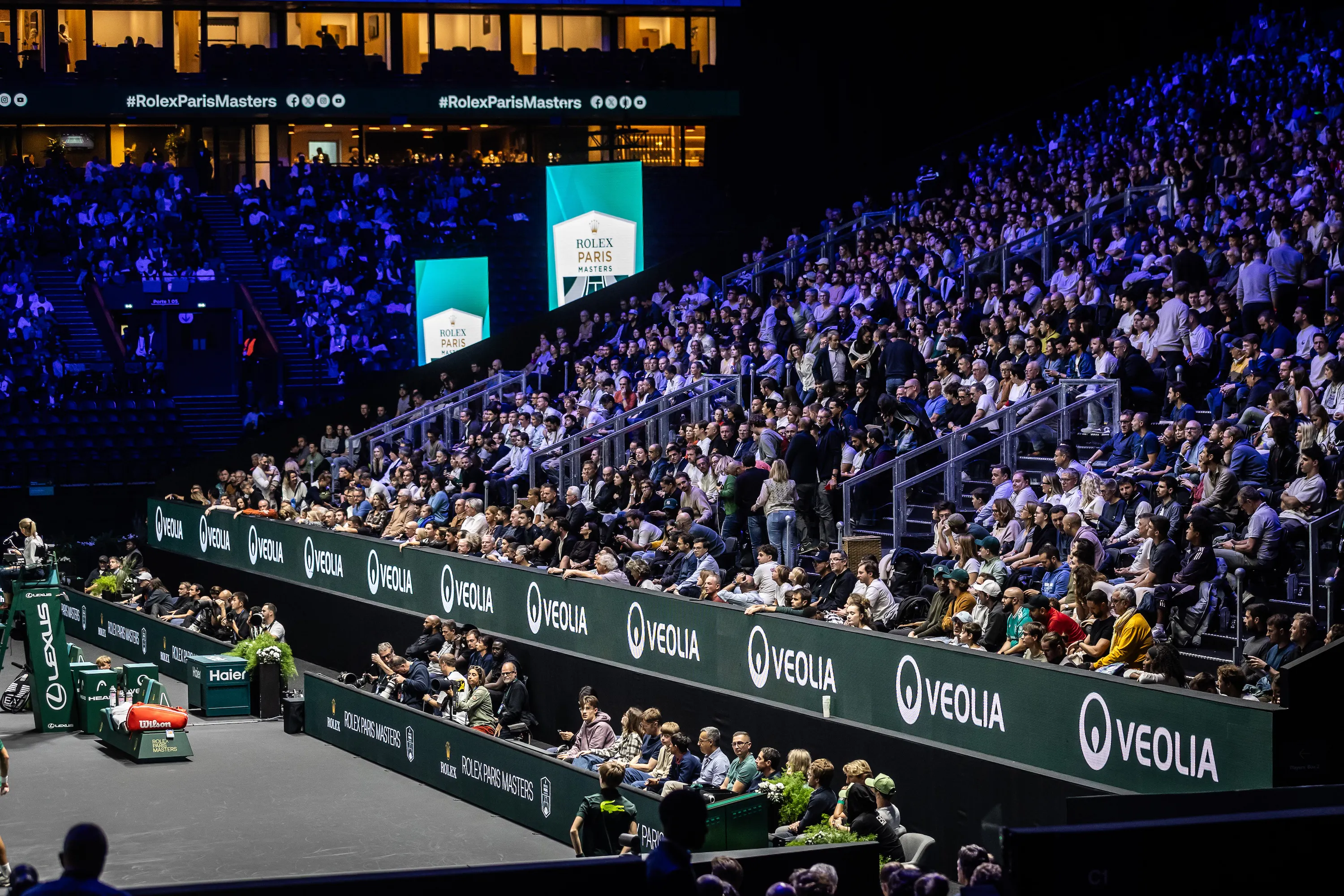
As the ATP Tour season reaches its final stretch, that intensity gives French players a crucial boost. Last year, Ugo Humbert drew on the home energy to defeat Carlos Alcaraz en route to his first ATP Masters 1000 final.
“As a tournament organiser, we always want French tennis players to be supported by the crowd because this adds value to the tournament,” Pioline told ATPTour.com. “Everyone wants to play well. French tennis players want to play well. We saw what happened with Humbert. We saw how much the crowd cheered for him. It is always something that is important.”
At La Defense Arena, it’s still unmistakably the Rolex Paris Masters. It’s still that late-season drama as players chase qualification for the Nitto ATP Finals, still that mix of sweat, glamour and high-stakes tension.
But now, it feels reborn. The arena’s glow reflects off the glass skyscrapers outside, the crowd surges as the lights fade to green, and the echoes of Paris’s sporting heart fill the air once again.
The stage is larger now. The chaos echoes deeper. The atmosphere, somehow, even more alive.